
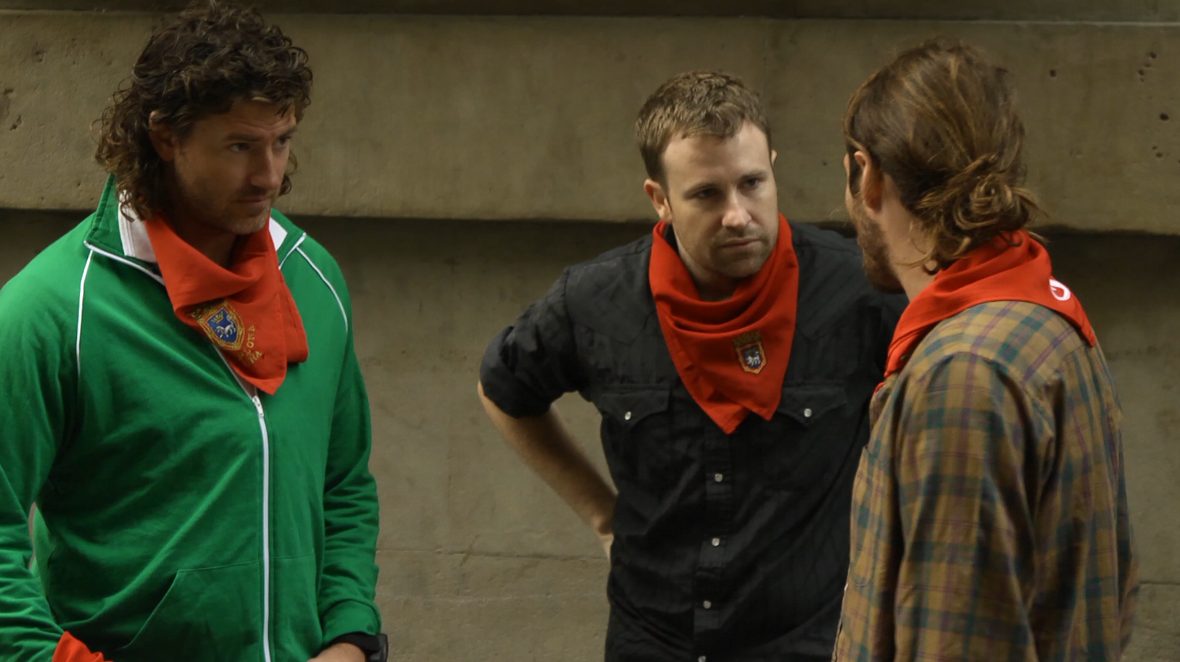
A bull runner is a person who runs in the encierro, the running of the bulls held every morning of San Fermín in Pamplona, Spain, moving down the street as the bulls overtake them. Among runners themselves the name means more than having been on the route: a bull runner is sober, actually runs, and does nothing that puts other people in danger.
That second meaning is the one that matters in Pamplona, and it is the one explained here by Dennis Clancey, who has run in Pamplona since 2007, directed the documentary Chasing Red, and founded Encierro, which teaches people who are considering the run. This is not encouragement to run. Whether to run is a personal decision, and the run is dangerous.
Key facts
- What a bull runner is: someone who runs in Pamplona’s encierro, moving down the route as the bulls pass, and who respects the tradition while doing it.
- When the run happens: every morning of San Fermín, July 7 to 14, at 8 a.m.
- Who may run: adults 18 and over. No runner may enter the route after 7:15.
- Who may not: anyone drunk, on drugs or not in full physical and mental condition, and anyone carrying bags, bottles or cameras or recording with a phone. Police remove them from the route.
- What it is not: standing in a doorway or along the barriers while the bulls go by.
- Who can become one: anyone, from anywhere, who commits to the tradition.
Being on the route does not make you a bull runner
Plenty of people have been on the street when the bulls came through. Some have done it for years. To the runners who return every July, that alone does not earn the name.
“There are people that have run with the bulls before, maybe multiple times, or get out on the run route even for a number of years. That doesn’t mean that we would necessarily label them a bull runner, in my own mind. And this is not about trying to critique people’s runs. It’s not. It’s: does this person demonstrate an understanding of the tradition?”
Dennis Clancey, director of Chasing Red
His example is someone who comes every year but gets on the route drunk or hungover, just to stand there for the feel of the bulls. He would not call that person a bull runner. Nor would he use the name for a veteran who tells others not to stand on the route but feels entitled to stand there himself.
What makes someone a bull runner
Dennis’s definition comes down to how a person behaves on the street.
“The idea of being a bull runner is that you take the run seriously. So you’re sober when you get on the run route. You don’t take undue risks or do things that put other people in danger. And you run. You actually run with the bulls.”
Dennis Clancey
Put plainly, a bull runner:
- is sober on the route;
- takes no undue risks and does nothing that puts other runners in danger;
- runs, moving down the street as the bulls overtake them;
- never feels entitled to a spot on the route just to stand in it.
None of this is about speed or style. It is about whether a person’s behavior on the street shows respect for the run and for the people running it. What the encierro is, and why runners treat it with that kind of seriousness, is in The encierro: what the running of the bulls really is.
Running versus standing the bulls
The plainest line between a bull runner and someone who is only on the street is whether they move.
“Someone who got on the run route and their only plan was ever to stand in a doorway, be stationary on the route: I wouldn’t say that they actually ever ran with the bulls. I think anyone would rationally say that if you’re not actively moving or running, then you didn’t run with the bulls.”
Dennis Clancey
Runners have a name for staying put while the herd goes by. Dennis calls it standing the bulls, and he does not count it as a run. A person who stands has not run with the bulls. They have become an obstacle.
Why standing makes the run more dangerous for everyone
The route is crowded, and every person on it who is not moving takes up space that runners need. Crowding is a large part of what makes the run dangerous. In Dennis’s experience it is very often what leads to injuries for other runners, and the more people there are on the route, the harder it is for a runner to see where to go.
The city’s rules say the same thing in their own way. The Bando de San Fermín, the city of Pamplona’s annual set of festival rules, prohibits stopping on the route and staying at the barriers or in doorways in a way that hinders the runners, and waiting in corners, blind spots or doorways before the bulls are released. Encierro explains the risk to the person standing as well in why standing on the run route is more dangerous than running.
Dennis has the least patience for the people who should know better: those who have come to the festival for years and still think it is fine for them to stand.
“If you want to show leadership, and you want to show true respect to a tradition, you should demonstrate the behavior of someone who respects that tradition. And there’s nothing in running with bulls that is standing along a route that we already know is so crowded.”
Dennis Clancey
A slowed run still counts
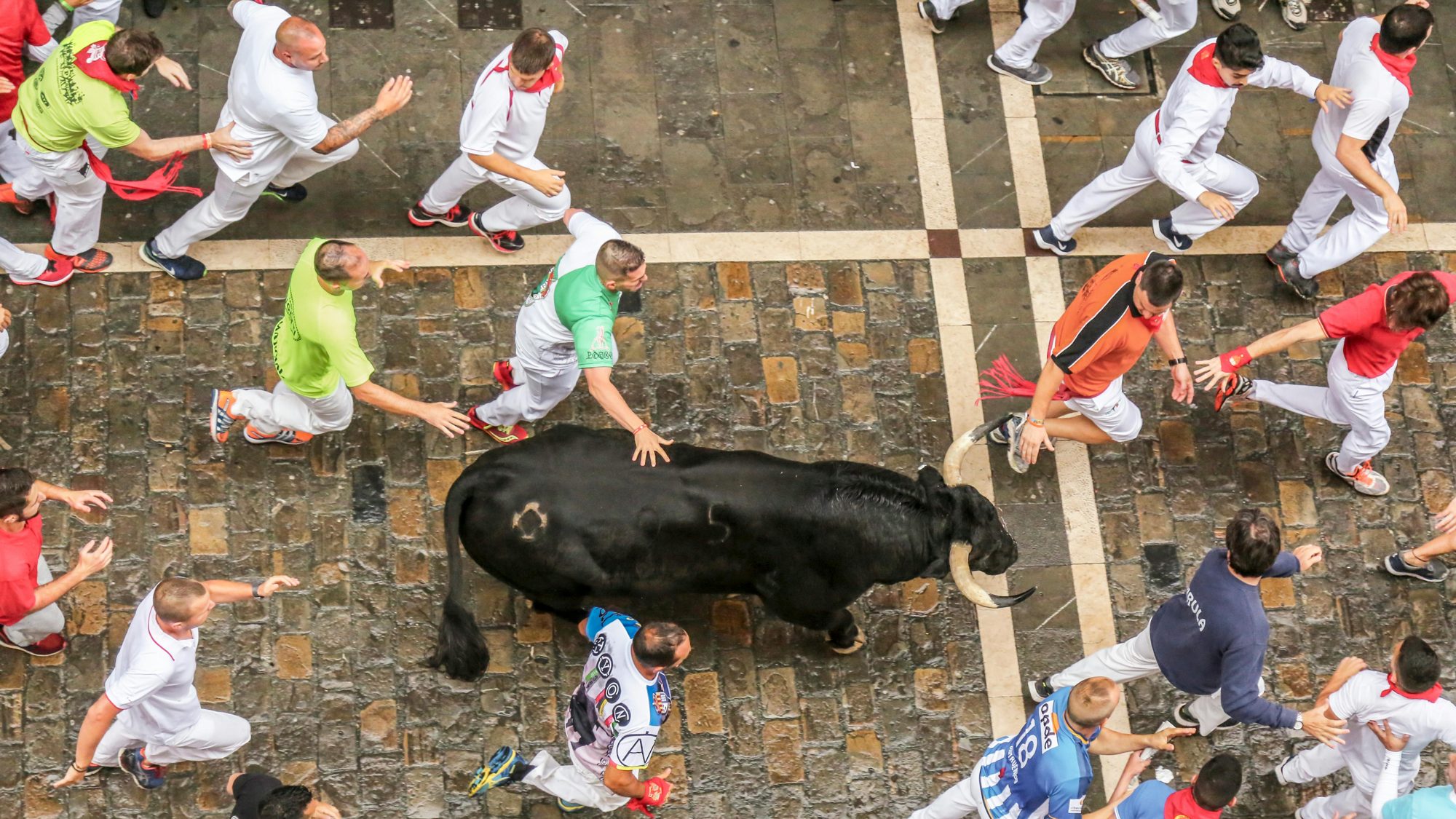
Running does not always mean a clean sprint. The street is full of people, and a runner can be slowed to a jog or a walk, or stopped for a moment, by someone in the way. Dennis has had runs where another runner darted in front of him too slowly and he had to bail so he would not get caught between that runner and the bulls.
What counts is the intent: the runner meant to move, understood what the run asks, and kept moving down the route as the bulls overtook them, even if the run was more of a jog or stuttered a bit. Getting on the route to stand never counts.
A first run is usually short. What it is actually like, from the night before to the moment the bulls pass, is in What it’s really like to run with the bulls.
When a bull runner stops running
Every runner reaches a day when they can no longer run. A bull runner does not respond by staying on the street and standing.
“When there comes a day that you are no longer able to run, that’s when you hang up your shoes and celebrate the runs of others.”
Dennis Clancey
The others he means are the bull runners still running. A runner who has hung up their shoes becomes a spectator, and a spectator’s place is never the recorrido, the bull run route itself. It is on the other side of the barrier, or on a balcony.
How runners earn a name in Pamplona
There are two kinds of recognition on the route, and they are not the same thing.
The first is being accepted as a bull runner at all. That comes from going out and doing it, run after run, without putting others at risk, showing respect for the tradition and obeying its rules. In Dennis’s words, it means “demonstrating some pattern of behavior that indicates a respect for the tradition and a following of the norms of that tradition.”
The second is being known as a particularly good runner, and that takes much longer.
“To be recognized broadly by other people as a good bull runner is, I think, something that takes a lot of practice. It takes having some fantastic runs. It takes being on the horns of the bull, directly in front of the horns of the bull, not impeding the bull in any way. You want to run at pace directly in front of the horns, really at pace, a step or two in front of it. You want to avoid touching it if you can.”
Dennis Clancey
Doing that for an extended stretch, or many times over, is what gives a runner a reputation for skill. That describes how renown works among experienced runners. It is not what a first run looks like: a first-timer isn’t trying to get in front of the bulls, but to run alongside them as they pass. How runners prepare is covered in Training for the bull run.
Either way, the recognition comes from other runners, never from oneself. Serious runners are known for a solemnness about the run, not for boasting about it.
Locals, Navarrans and runners from abroad
The people of Pamplona and Navarra shaped the encierro. Runners from other countries run beside them on the same terms.
“All runners are treated as equal on the run route, so long as the runners are respecting the tradition of the run. You don’t necessarily have cliques on the run so much. The point here is: anyone can be a bull runner. It just takes getting out on the street and committing yourself to the tradition, no matter where you’re from. Obviously, the locals from Pamplona, the Navarrans, and other people from the region have really defined what this tradition is. But no matter where you’re from, you can commit yourself and be a bull runner.”
Dennis Clancey
The same idea, that everyone at San Fermín is equal and longtime regulars welcome newcomers, runs through the whole festival. More on the fiesta around the run is in San Fermín: the nine days beyond the run.
Who should not run
Encierro, the company Dennis founded, does not tell people to run, and it does not tell them not to.
“I’ve never told anyone not to. I advise people on what’s required for the run, and I have had many clients who have decided not to run after having gotten all the information. My goal is not to encourage anyone to run. It’s also not necessarily to discourage anyone from running. But it’s certainly making sure they understand what’s entailed.”
Dennis Clancey
Some of those clients were not physically able to run properly and chose, respectfully, not to. Dennis’s point is that someone who cannot move down the route will be obvious to the police, and the rules back that up: the city bars anyone who is not in full physical and mental condition. Encierro explains its approach in Why we exist: bull runners for bull runners.
The friend in the rain
The decision is sometimes made on the morning itself. Dennis has had clients come to him on the route, sometimes on their second day of running, unsure whether to run again, and some have stepped off the route just before the bulls were released.
“I had a good friend who was at his first fiesta, and he had already run twice, and it was the third day, and it was raining, and he was questioning whether he should run a third time. I called out the ganadería, the bull-breeding ranch that was running that day, and I noted the fact it was raining. He got off the run route, and it just so happened by chance that in the area where he was intending to run, according to him, someone was gored quite badly, right in that spot.”
Dennis Clancey
Dennis did not tell him not to run. He gave him reasons for an out, including the rain, which makes the stones of the route slippery, and his friend made the decision himself. The friend still tells the story.
The city’s rules for every runner
Whatever a person thinks of themselves as a runner, the city of Pamplona sets the minimum. The Bando de San Fermín 2026 says, among other things:
- No one under 18 may run, and minors may not stay on the route from 7:15 until the run is over.
- No runner may enter the route after 7:15, and police may close access earlier if the route is full. Runners wait where the police place them.
- No one may be on the route drunk, under the effects of drugs, or not in full physical and mental condition.
- Nothing that endangers the run may be carried, including bags, backpacks, bottles, glasses, canes, photo or video cameras and microphones, and no one may record with any device, phones included.
- No stopping on the route or staying at the barriers or in doorways in a way that hinders runners, and no waiting in corners, blind spots or doorways before the release.
Anyone breaking these rules on the route is removed immediately by the police and reported. A bull runner, in Dennis’s sense, holds to a higher standard than the rules, but never a lower one.
Bull runners in Chasing Red
Chasing Red follows four runners through the eight runs of San Fermín 2012, filmed from cameras placed along the route, and tells their story through what they did on the street. The film’s story is in What is Chasing Red? How the crew filmed the runs without ever putting a camera on a runner is in Filming the running of the bulls.
Questions people ask
Is everyone who runs with the bulls a bull runner?
Not to the runners themselves. The name goes to people who run the way the tradition expects: sober, moving with the bulls, and never a danger to others. Someone who only stands on the route while the bulls pass has not run with the bulls.
What does “standing the bulls” mean?
Getting on the route with no plan to move, and staying in a doorway or along the barriers while the herd goes by. Dennis Clancey does not count it as a run, and the city’s rules prohibit staying at barriers or in doorways in a way that hinders runners.
How old do you have to be to run with the bulls in Pamplona?
18. The Bando de San Fermín bars anyone under 18 from the run, and minors may not stay on the route from 7:15 until it ends.
What does running “on the horns” mean?
Running at pace directly in front of a bull’s horns, a step or two ahead, without impeding or touching it. Doing it for long stretches, or many times, is what earns a runner a reputation for skill. It is not what a first run looks like.
Can foreigners be bull runners?
Yes. All runners are treated as equal on the route as long as they respect the tradition, though the people of Pamplona and Navarra defined it.
Where does a bull runner watch once they stop running?
From behind the barrier or from a balcony, never from the route itself.
Sources
- Dennis Clancey, interview with Chasing Red, October 23, 2026.
- Ayuntamiento de Pamplona, Bando de San Fermín 2026, rules 5.4, 5.6 and 5.13 (entry cutoff, minimum age, prohibitions, removal by police).
- encierro.com, “Why Standing on the Run Route Is More Dangerous Than Running” (Dennis Clancey, June 21, 2026).
- encierro.com, “Encierro, Why We Exist: Bull Runners for Bull Runners.”