
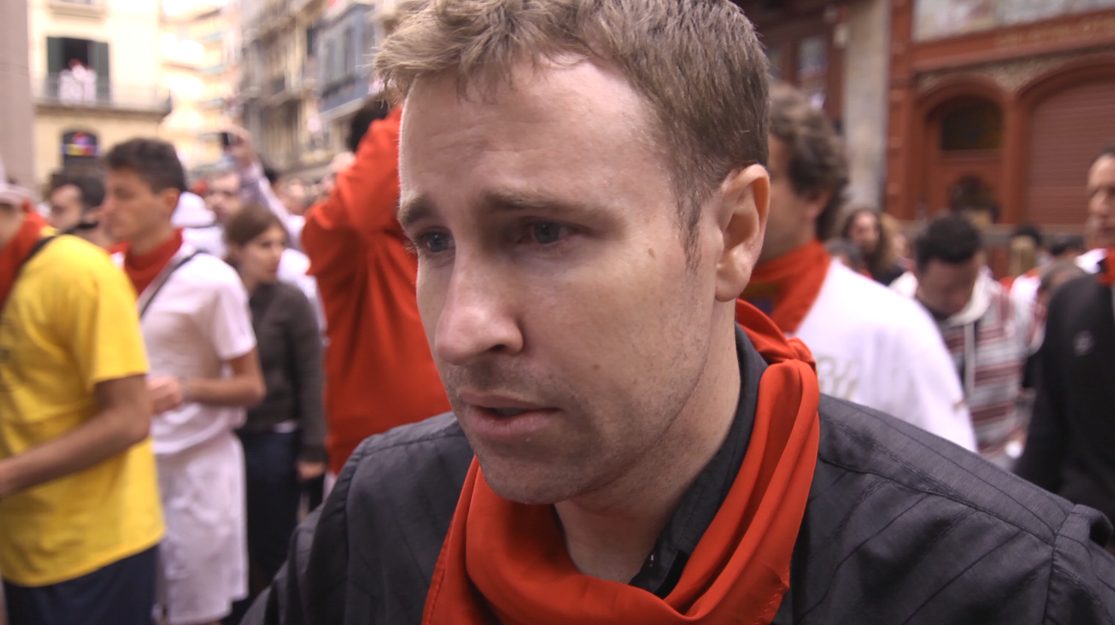
Training for the bull run means preparing physically and mentally for a few seconds of running on a crowded street. The body needs whole-body strength, short-sprint speed, acceleration and the agility to react when something goes wrong. The mind needs a plan for the night before, a calm morning, a clear picture of the stretch of street you will run, and a choice of where to run that does not put other people at risk.
This is how Dennis Clancey prepares. He has run in Pamplona since 2007, directed the documentary Chasing Red, and founded Encierro, which teaches people who are considering the run. Training for the running of the bulls makes a runner better able to handle what happens on the route. It does not make the run safe, and nothing here is encouragement to run. Whether to run is a personal decision. The run is dangerous: people are hurt in it, and some have died.
Key facts
- What to train: the whole body, then speed, acceleration and agility. Dennis uses low hurdles, a sprint parachute, hill sprints, intervals, and drills that mix jumping and sprinting.
- How fit you need to be: there is no minimum. Be as fit as you can be. The city does bar anyone not in full physical and mental condition.
- How far you will run: most runs are under 100 meters. Sprints of about 50 to 400 meters cover the range.
- The night before: Dennis’s own rule is no alcohol within eight hours of the run. The city bars anyone drunk from the route.
- The morning: warm up off the route, then be inside it before the 7:15 entry cutoff. The run starts at 8 a.m.
- The first run: a straighter stretch, such as the Town Hall section or Calle Estafeta. Not La Curva.
Training for the bull run: why the whole body matters
The run is short, and a well-timed first run might cover 40 meters. But the street is full of people, and the few seconds when the bulls pass can turn chaotic: a runner falls in front of you, someone cuts across, the crowd closes. Dennis’s training starts with the whole body, upper and lower, so that every muscle works efficiently when a situation on the route is not the one he expected.
On top of that comes running, which is where most of his training goes. The aim is not endurance. It is reaction, acceleration and speed over short distances.
The drills a veteran runner uses
These are the things Dennis does in his usual routine before San Fermín:
- Low hurdles set out for slalom jumping, to train quick, reactive, fast-twitch movement.
- A sprint parachute, which he has used for many years. The parachute drags behind the runner and holds him back, so he learns to sprint against resistance. He credits it with helping his speed over the years.
- Hill sprints, which build acceleration. Other runners say the same.
- Different kinds of sprinting and interval training.
- Drills that combine jumping and running, or jumping and sprinting.
Distance matters less than people expect. Most runs are under 100 meters, and sprints of about 50 to 400 meters cover what a runner is likely to need, including a longer escape if a bull is separated from the herd. That range is explained in What it’s really like to run with the bulls.
How fit do you need to be to run with the bulls?
It is the question Dennis hears most often about training for the running of the bulls, and his answer is not a number.
“I always tell people, just be as fit as you can be coming into the run. When you look at videos of the run, oftentimes you can see there are people that are incredibly out of shape that make their way on the run route. So it’s not that there’s a minimum level of fitness that you need. I think the more fit you can be, the more able you are to handle the situations that present themselves while you’re on the run route.”
Dennis Clancey, director of Chasing Red
There is a floor, though, and the city sets it. The Bando de San Fermín, the City of Pamplona’s annual festival rules, bars anyone from the route who is not in full physical and mental condition, and the police remove them.
Dennis does not see training as something that can be done wrong, so long as it makes sense for the person and helps their fitness. He encourages it, for the run and for life in general. What he values is the reason behind it.
“I certainly appreciate when I see someone also doing a physical routine to prepare for the running of the bulls, because the decisions that a runner makes on the run route don’t just affect them. It can affect the other runners. It can affect the bulls. And so the more prepared people are for the run, the better it is for everyone.”
Dennis Clancey
Preparing physically and mentally: the night before
Mental preparation, for Dennis, rests on visualization, and the preparation for each run starts the evening before it.
“The preparation for each run individually, I think, starts the night before. It’s having a plan for how your night will go. I don’t drink in the evenings, to any degree, when I’m going to be running. I don’t drink within eight hours of getting on the run route, as a general rule. I want to be hydrated and relaxed on the run route.”
Dennis Clancey
The eight-hour rule is his own. The city’s rule is simpler: no one may be on the route drunk or under the effects of drugs. He makes sure he sleeps and wakes up sober, without grogginess or a headache.
What a first-timer’s night is usually like, short on sleep and full of questions, is covered in What it’s really like to run with the bulls. It is not repeated here.
Not overthinking it
Visualization is not the same as worry. Dennis pictures the run, then leaves it alone until morning.
“I try not to overthink the run. I don’t typically think about the next run until I’m waking up that morning. I’ve never found particular value in worrying about things that you can’t actually control.”
Dennis Clancey
The morning of the run
There is no extra preparation he feels he needs in the morning. He gets out, sprints and stretches. On a typical morning he stops at El Redín, a café on Calle Mercado near the start of the route, for a quick coffee. It also has a bathroom, which can matter in the last minutes before a run.
For sprints he goes to the bastion wall on the north side of the old town, part of the fortifications that surround the Casco Viejo. Many local and Navarran runners warm up there. It has space that the route does not: once runners are on the route it is packed, and there is no room to sprint.
The warm-up has to fit the city’s clock. No runner may enter the route after 7:15, and police can close access earlier when it is full. The run starts at 8.
Staying loose on the route
Once inside, runners can stand in one place for a long time. Dennis keeps doing basic hamstring and quadriceps stretches through that wait so he stays nimble. He cannot jog again until a couple of minutes before the run, when he does a few laps back and forth through his section, jumping and activating his leg muscles.
Where a first-timer should run, and where not
Training for the bull run includes choosing where to run, and the choice affects more than the person making it.
In 2026 it went wrong for a great and consistent runner at La Curva, the sharp turn from Calle Mercaderes into Estafeta. That runner has run the turn for years, day in and day out, right on the horns going into it. This time someone nobody had seen before was standing still on the outside of the turn and stiff-armed him as he ran through. Experienced runners accept that this can happen. It is still unfortunate when it does.
First-timers are often drawn to La Curva because they have heard it is a dangerous place and want the story of having run there. Dennis’s objection is not mainly that they will be hurt. It is that the turn is more complicated to run, and a newcomer there is a risk to the runners who know it. He speaks from experience.
“The times that I’ve gotten injured on the run route, I’ve gone down by being tripped by others or hit by the bulls, it’s always been right around La Curva.”
Dennis Clancey
His advice for a first run is a straighter stretch, either the Town Hall section (Ayuntamiento) or Calle Estafeta. Some people choose a portion of Santo Domingo. Whatever the choice, it should not add complexity to a part of the route that is already overcrowded.
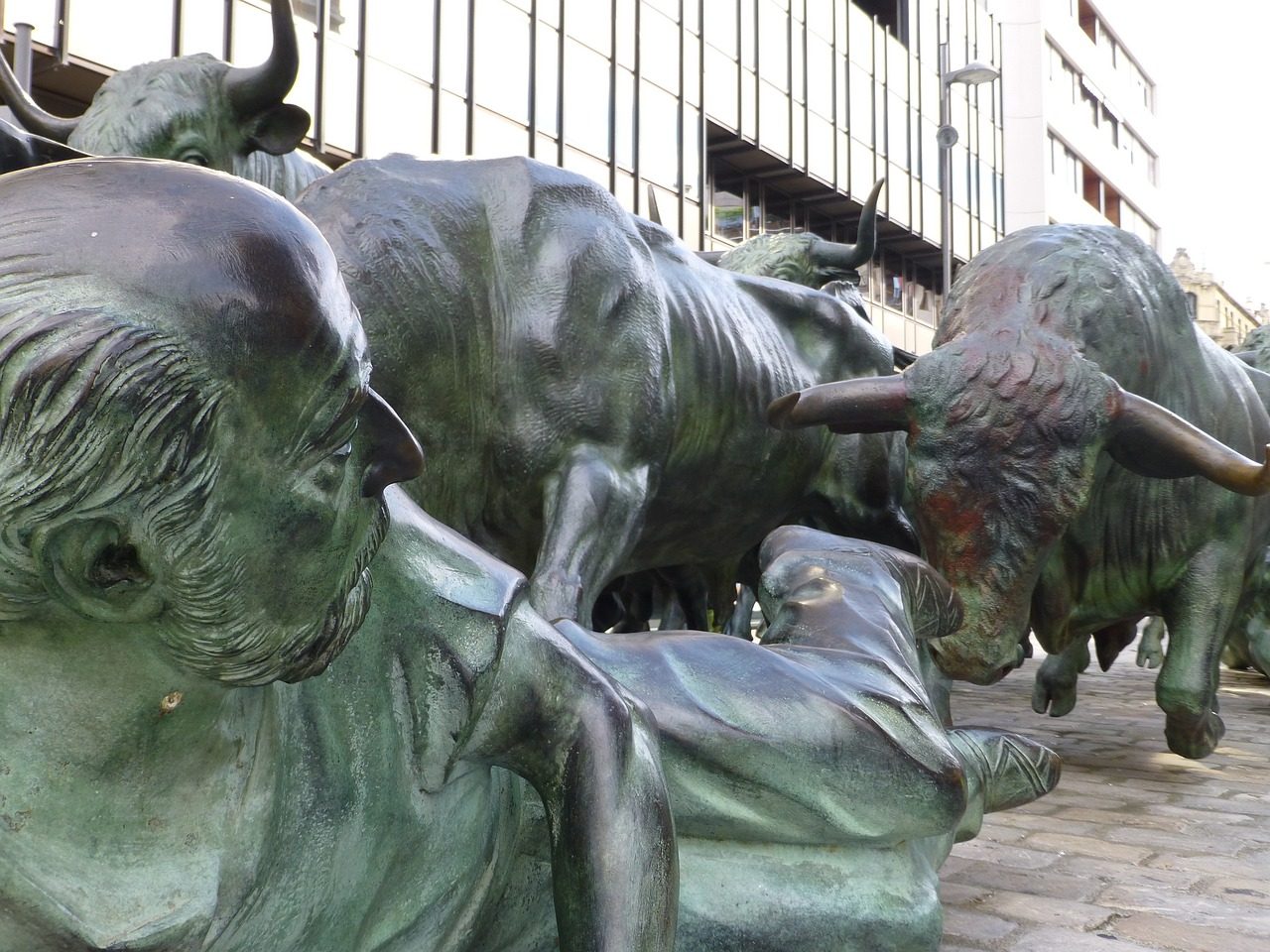
How Encierro helps runners prepare
Visualization needs something to picture. In Dennis’s words, “It’s hard to do visualization if you haven’t been on the route.” So Encierro, the company he founded, starts by giving people a good lay of the land: the sequence of the whole event, and a walk through every part of the route, including sections a runner will not be in, so they understand what happens before and after the bulls reach their position.
From there the tours and classes work through contingencies (a lone bull, a fall, being pulled off the route early), how to dress, and where to meet people afterward. They cover positioning, including where to be across the width of the street, speed, other people, dangerous places where crowds typically gather, and the mentality experienced runners bring compared with the one recommended for first-timers. The point is that with all of that settled, a runner can focus on the few things that matter when the bulls arrive. Encierro’s guide to how to run with the bulls covers the basics, and Dennis Clancey’s runner page has his background.
Encierro does not encourage anyone to run. Some of its clients decide not to after learning what the run involves, as What is a bull runner? explains.
The real point of preparing: the other runners
Every piece of preparation in this article comes back to the same idea. Dennis wants first-time runners to understand that the run “is not something that exists for their enjoyment.” They share the street with other runners every morning, so where they run, and where they stand, should be decided with that in mind: a place where they can have a successful run without putting undue risk on anyone else. In his words, showing “a true respect for a tradition is recognizing the effect you can have on others.”
“If you’re a first-time runner coming into this town, it’s not your tradition. It’s a privilege, in a sense, to be able to get on the run route and do this. Doing it respectfully, I think, involves not putting yourself in a position where you’re maximizing your danger to other runners.”
Dennis Clancey
That is the standard runners hold each other to, and it is much of what being a bull runner means in Pamplona. The tradition behind it is explained in The encierro: what the running of the bulls really is.
Seeing the run before you train for it
Chasing Red follows four runners through the eight runs of San Fermín 2012, filmed from cameras placed along the route, from the Cuesta de Santo Domingo through La Curva and Estafeta. How the filmmakers covered those mornings is in Filming the running of the bulls.
Questions people ask
How should I train for the running of the bulls?
Train the whole body first, then short-sprint speed, acceleration and agility. Hill sprints, intervals, low hurdles and drills that mix jumping with sprinting all fit. Long, slow distance running matters much less.
Do you have to be very fit to run with the bulls?
There is no set level. Being as fit as you can makes you better able to handle what happens on the route, but the city’s rules bar anyone who is not in full physical and mental condition.
Can I drink the night before the bull run?
Being drunk on the route is against the city’s rules and gets runners removed by the police. Dennis Clancey’s own rule is no alcohol within eight hours of getting on the route.
When do you have to be on the route?
Before 7:15, when entry closes, and the police can close it earlier. Warm up before you go in, because there is little room to move once you are inside.
Where should a first-timer run?
A straighter stretch such as the Town Hall section or Calle Estafeta. Dennis Clancey advises against La Curva for a first run because it is complicated and a newcomer there puts other runners at risk.
Sources
- Dennis Clancey, interview with Chasing Red, October 23, 2026, and follow-up answers the same day.
- Ayuntamiento de Pamplona, Bando de San Fermín 2026, rules 5.4 and 5.13 (entry cutoff at 07:15; no one on the route drunk, on drugs or not in full physical and mental condition).
- Ayuntamiento de Pamplona, Mercado de Santo Domingo listing (Calle Mercado, at the start of the encierro route).
- encierro.com, Pamplona tours, How to Run With the Bulls, and Dennis Clancey.