
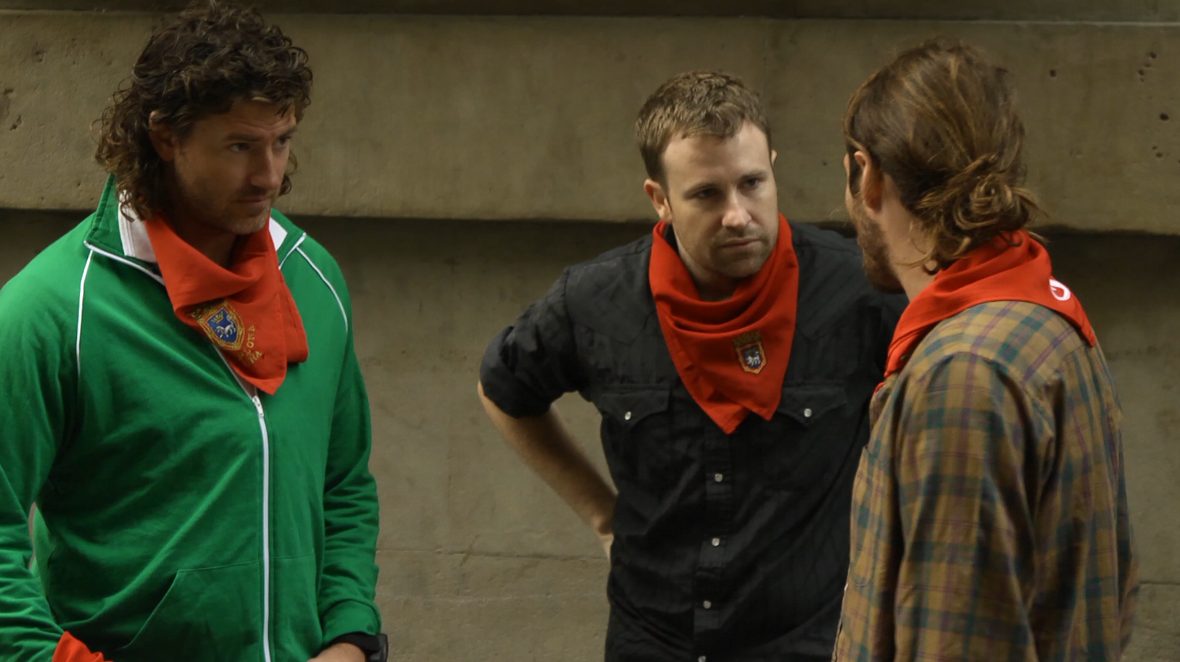
Chasing Red, the 2015 independent documentary about the running of the bulls, was paid for in rounds. Dennis Clancey, its director, funded the early years of research himself. A Kickstarter campaign of about $23,000 paid for principal production at the 2012 Fiesta of San Fermín. Post-production was funded by Dennis, a couple of other individuals and a second round of crowdfunding on Indiegogo.
This is the money side of an independent documentary, with the numbers as Dennis gave them: what the shoot cost, where each part of the budget went, how a crew that was never paid was rewarded, and how the film reached the platforms where it streams today. The story of the shoot itself is in Making Chasing Red.
Key facts
- Research years: 2007 to 2011, paid for by Dennis himself.
- Production money: a Kickstarter campaign that closed on April 6, 2012, with $22,966 from 198 backers against a $22,000 goal.
- Biggest cost: about $14,000 in flights to bring the crew to Pamplona.
- The crew’s pay: a credit, a free trip to the fiesta and the chance to run. No wages.
- Post-production: funded by Dennis, a couple of other individuals and an Indiegogo campaign; pickup shots in 2013 and music rights were paid for at this stage.
- Distribution: Magnolia Pictures, an arrangement that came after the film’s release.
Before the money: self-funded research, 2007 to 2011
Dennis started talking about the film in 2007, his first year running in Pamplona. For the next four years there was no outside money. In a Q and A with the travel site Travel Edits around 2013, he said he had personally funded those first years, 2007 to 2011, of research, filming and experiencing the fiesta.
What changed that was a teaser. In 2011 Brandon Widener, who became the film’s co-producer and director of photography, drafted the project’s concept trailer, shot in Pamplona at the 2011 fiesta. It gave the project something to show people, and it became the pitch for the campaign. How the teaser was made, and why its runners are not in the finished film, is told in Making Chasing Red.
The Kickstarter campaign that paid for the 2012 shoot
The campaign ran on Kickstarter from Phoenix, Arizona, under Dennis’s name. It closed on April 6, 2012, three months before the fiesta, having raised $22,966 from 198 backers. Its goal had been $22,000. That crowdfunded money paid for principal production, and for a shoot abroad with an international crew, it did not leave much.
The backers’ support is part of why the film’s end credits list everyone who gave any support or advice along the way. Travel Edits quoted Dennis at the time: “I am forever grateful for the 198 awesome people who supported this project by donating to Kickstarter.”
How much it cost to make an independent documentary in Pamplona
The whole budget for principal production, the eight runs of San Fermín 2012 and the days around them, was the Kickstarter money. Dennis’s breakdown:
- Flights: about $14,000.
- Apartment: about $3,000.
- Food: about $3,000.
- Incidentals and transport: about $3,000.
- Total: about $23,000.
Flights: most of the budget
The crew was international, and getting them to Spain took most of the money. About $14,000 went on flights for four primary cameramen, Dennis himself, and the two-person crew from LineCam Systems.
LineCam is the cable camera system that runs above the street during the run. How the production used it, and how the crew filmed the run safely, is in Filming the running of the bulls.
One three-bedroom apartment
That left about $9,000. Around $3,000 of it rented an apartment in Pamplona for the fiesta. It was a three-bedroom, and the whole crew shared it.
The apartment had seen fuller nights. The year before the shoot, Dennis had packed it well past what it was built for:
“The most people I’ve ever had in that three-bedroom apartment, and this is the tiniest three-bedroom apartment you can imagine, was about 19 people. We had two couples sleeping on the kitchen floor one night, and there was one guy sleeping in the tub with his pañuelo tied over his eyes, for peace.”
Dennis Clancey, on the fiesta the year before the shoot
He does not remember how many people stayed there during the Chasing Red shoot itself.
Food, buses and the rest
The last $6,000 was split in two. About $3,000 fed the crew through the fiesta, and about $3,000 covered incidentals and transportation, buses and the like. It was a tight budget.
How the crew was paid
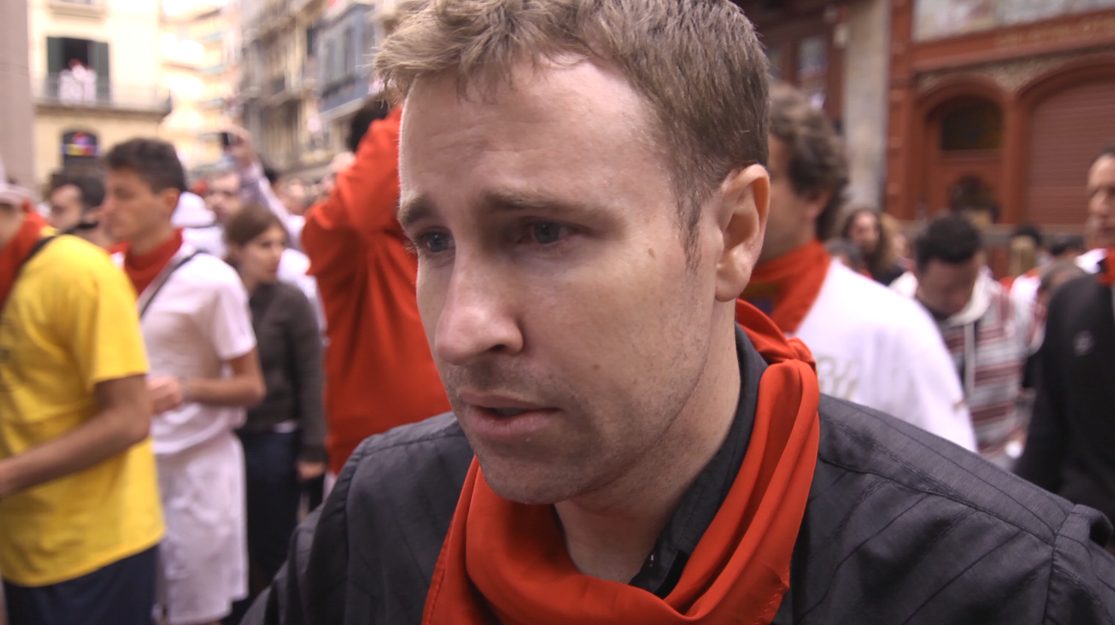
Nobody on the crew was paid a wage. The agreement was simple: a screen credit, flights, a bed in the shared apartment, meals, and the chance to run with the bulls if they wanted to. In Dennis’s words, it was “a free trip, and a great project to work on in the middle of arguably the world’s greatest fiesta.”
Brandon Widener, the co-producer and director of photography, was also the finishing editor, and Brian Moghari, who shot in 2012, was the main editor. The film’s third producer, alongside Dennis and Widener, is Iker Zuasti, who is based in Pamplona. He had cameras all along the run route and gave the production his footage. Dennis calls him “a huge help, and just a great resource in the town.” The full crew, including the cinematographer who flew in from Australia at the last minute, is in Making Chasing Red.
Paying for post-production
The Kickstarter money covered the shoot. Everything after it needed new funding, and there was a lot of work still to do: pickup shots in 2013, and rights to buy for the music. Post-production was funded primarily by Dennis and a couple of other individuals, along with a round of funding on Indiegogo.
A second crowdfunding round had been the plan from early on. In the same Travel Edits Q and A, given after the 2012 shoot, Dennis said a similar campaign was planned to fund post-production. The edit was done in Los Angeles by Brian Moghari over a long stretch, and the story took its final shape there, as told in How the Chasing Red story evolved.
From release to Magnolia Pictures
Chasing Red premiered in 2015 and won Best of the Fest at the LA Indie Film Festival, then screened in theaters in cities across the United States. It first went online on Vimeo; in February 2020, We Are The Mighty reported that it was available to rent there.
The arrangement with Magnolia Pictures came after the film’s release. Magnolia now distributes it, and today the film is available on most streaming platforms. What the film is about, and who is in it, is in What is Chasing Red?
Where to watch Chasing Red
These are the platform pages for the film, each checked on October 23, 2026. Availability and prices change, so check the platform before you plan to watch.
- The Roku Channel: free with ads.
- Hoopla: free with a library card from a participating library.
- Prime Video: rent or buy, or through a subscription channel.
- Apple TV: rent or buy.
- Fandango at Home, formerly Vudu: rent or buy.
- Google Play: rent or buy.
- YouTube Movies: buy.
The site keeps a current list in the where to watch section.
What the money side taught
Asked what he would do differently on the money side, Dennis talks about what the production taught him: how to set up a legal entity for a production, and how to handle the taxes on donations that come in through crowdfunding. Neither lesson is about filmmaking. Both are about running the production as a business, which is what a crowdfunded documentary becomes once the backers’ money arrives.
“I don’t think there’s anything I would necessarily do different now. But when you’re doing something on a budget, you always want to make sure that you are doing it as financially efficient as possible.”
Dennis Clancey
Dennis still runs in Pamplona. His runner page is on encierro.com, the site he owns about the encierro.
Questions people ask
How was Chasing Red funded?
In stages. Dennis Clancey paid for the research years, 2007 to 2011, himself. A Kickstarter campaign raised $22,966 from 198 backers for the 2012 shoot, and post-production was paid for by Dennis, a couple of other individuals and an Indiegogo campaign.
What was the budget for the Chasing Red shoot?
About $23,000, the Kickstarter total. About $14,000 went on flights, and about $3,000 each on the apartment, food, and incidentals and transport.
Were the crew of Chasing Red paid?
No. They received a screen credit, a free trip to the fiesta with food and lodging, and the chance to run with the bulls if they wanted to.
Who distributes Chasing Red?
Magnolia Pictures. The arrangement came after the film’s 2015 release; before that, the film was available on Vimeo.
Can you watch Chasing Red for free?
Yes, in two ways in the United States: with ads on The Roku Channel, or with a library card on Hoopla. It is also available to rent or buy on the major platforms.
Sources
- Dennis Clancey, interview with Chasing Red, October 23, 2026, and follow-up answers the same day.
- Kickstarter, “CHASING RED by Dennis Clancey” campaign page (amount pledged, goal, backers, end date April 6, 2012).
- Travel Edits, “Chasing Red: One Man’s Obsession with the Running of the Bulls in Pamplona” (Q and A with Dennis Clancey, about 2013).
- We Are The Mighty, “This Iraq war veteran has been running with the bulls since 2007,” February 5, 2020.
- Wikipedia, “Chasing Red” (producers, editor, premiere, distributor).
- Platform pages for the film on The Roku Channel, Hoopla, Prime Video, Apple TV, Fandango at Home, Google Play and YouTube, checked October 23, 2026.