
Chasing Red was filmed mainly in Pamplona, in the streets of the old town during the eight runs of San Fermín 2012. The rest of the footage in the finished film comes from two towns in the province of Albacete, Hellín and Elche de la Sierra, and from Arizona, where the Grand Canyon rim stands in for the story of the director’s life at home. Interviews and voice work were recorded in a sound booth in California.
Behind those locations sits several years of research: a trip to the ranches where the bulls are raised, a library of books, local historians, and a long apprenticeship on the street. This is the map of all of it, with what each place gave the film, told by Dennis Clancey, who directed Chasing Red and has run in Pamplona since 2007.
Key facts
- Main location: Pamplona’s Casco Viejo, the old town, during San Fermín 2012.
- Other towns in Spain: Hellín, with David Ubeda’s family, and Elche de la Sierra, where David ran as a boy. Both are in Albacete province, Castilla-La Mancha.
- United States: the rim of the Grand Canyon and the roads north of Phoenix, Arizona; a sound booth in California.
- Filmed but cut: a planned ending in Cuéllar, and a scene in an Arizona apartment.
- Research: ranches in Andalusia in 2008, local historians in Pamplona, and the street itself, every morning of the fiesta.
Where was Chasing Red filmed?
Four places in Spain and the United States appear on screen. In Spain, the footage in the finished film comes from three places: Pamplona, Hellín and Elche de la Sierra. The filmmakers also shot in Cuéllar, but none of that footage made the final cut.
Arizona supplies the director’s own backstory, and California the sound. The Wikipedia entry for the film lists the same spread: additional filming in Arizona, various Spanish towns and California.
Pamplona: the streets of the Casco Viejo
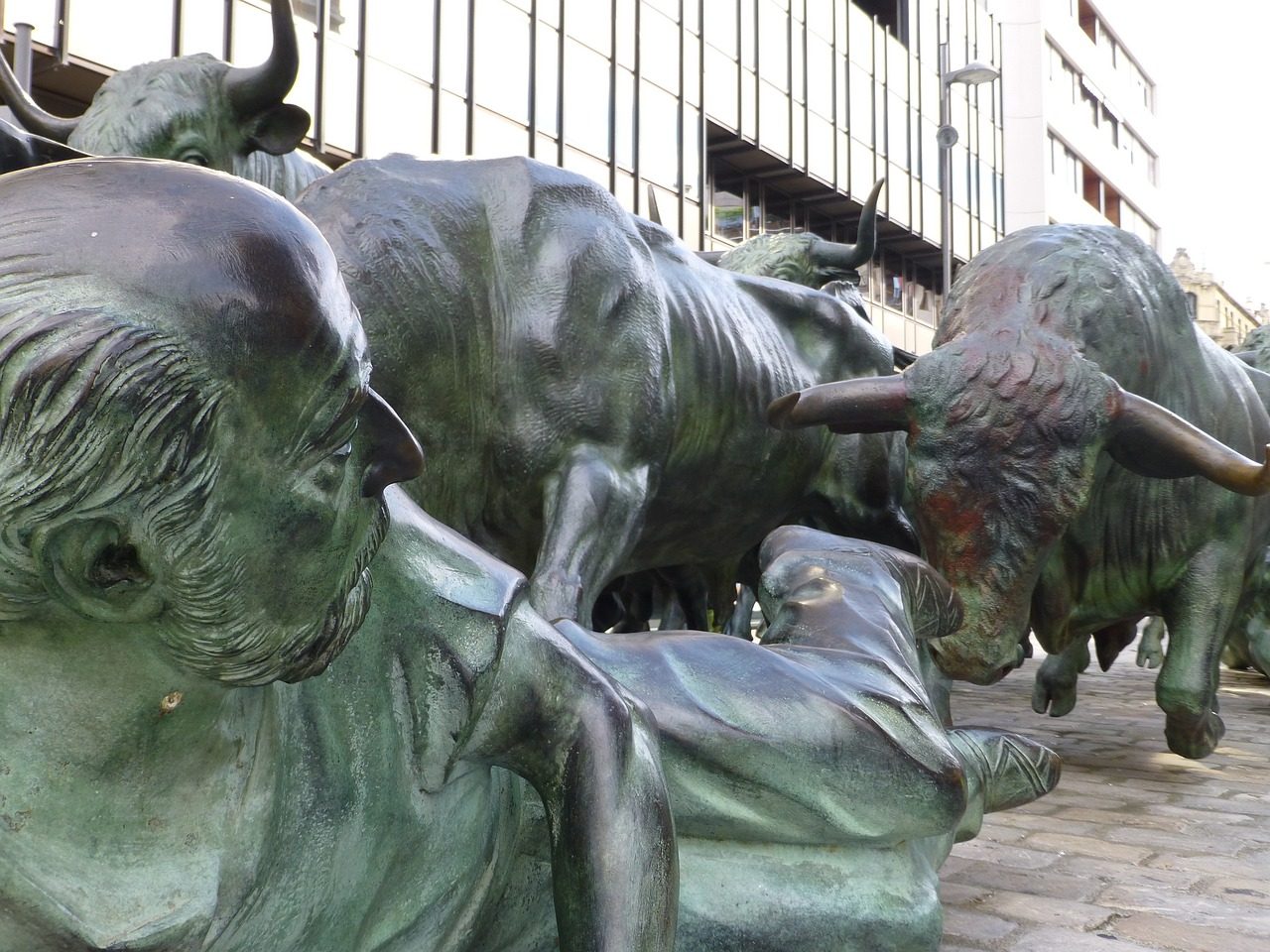
Every Pamplona scene in the film is in or beside the Casco Viejo, the old town, and much of the film happens out in its streets. The run itself was covered from cameras placed along the route, from the Cuesta de Santo Domingo through the Town Hall square, Calle Mercaderes, the turn known as La Curva and Calle Estafeta. How those mornings unfold is told in the encierro explained, and the fiesta around them in the history of San Fermín.
Off the route, the film moves indoors. The apartment interiors were shot mainly on Calle Aldapa, a short street that curls around the church of San Fermín de Aldapa, and on Calle de los Mercaderes, which the bulls pass every morning. Bill Hillmann’s interior scenes were filmed in a piso, a rented flat, he was staying in on Calle Estafeta.
One short scene leaves the old streets: a dinner between Dennis and first-time runner Josiah Lloyd in the Parque de la Media Luna. The park sits just outside the old city, where it meets the Segundo Ensanche, and looks down over the bends of the river Arga. The city counts it among Pamplona’s historic parks, and it was designed by the architect Víctor Eusa.
Hellín: David Ubeda’s family
Before the 2012 fiesta the filmmakers traveled to Hellín, a town in Albacete province best known in Spain for its Holy Week Tamborada, days of drumming that Spain’s tourism authority lists as a Festivity of International Tourist Interest. They went to film David Ubeda, the Spanish runner among the film’s four, at his family’s hacienda. That visit, and what it meant for the production, is covered in the making of Chasing Red. The hacienda is private family property and is not open to visitors.
Elche de la Sierra, the cradle of the encierro
The second Spanish town is the one that explains David. Elche de la Sierra sits in the Sierra del Segura, the mountains in the southwest of Albacete province. David ran there as a boy, and there he met Carlos Santoro, the man who taught him how to run, who also appears in Chasing Red. The filmmakers went to film that part of David’s backstory.
The town lies in an area known as la cuna del encierro, the cradle of the encierro, because so many encierros are held there, and Elche de la Sierra is known as the cradle of the encierros in Albacete province. Its runs have been held in their present form for about 200 years, and each of the twelve municipalities of the Sierra del Segura holds its own. The town runs bulls on February 3, for San Blas, and from September 15 to 18, during its patronal fiestas. The bulls are first brought in from the countryside, then run through the streets from the Puente del Arroyo to the Plaza del Ayuntamiento. In December 2016 the regional government of Castilla-La Mancha declared the encierros a Fiesta of Regional Tourist Interest.
Where Pamplona’s run is a sprint of a few minutes through city streets, these mountain encierros begin in the countryside, and they are the world David grew up in. Showing it gave the film something the streets of Pamplona could not: where a Spanish runner comes from.
Arizona: the Grand Canyon rim
Dennis’s own backstory was filmed in Arizona, where he was living, mostly at the Grand Canyon. Dennis had first pictured a run sequence in downtown Phoenix. The bigger idea came from Brandon Widener, the film’s co-producer and director of photography: if he was flying out to Arizona, they should do something spectacular. So they filmed on the rim of the Grand Canyon.
Widener brought two drones: a DJI Phantom and a larger drone that could carry a DSLR camera. High up at the canyon, the propellers on the larger drone were damaged. Replacement parts were back down in Phoenix, too far away to save the shoot. The scene on the rim was shot instead with the DJI Phantom, flying a GoPro.
The larger drone was used the next day, north of Phoenix, for a few shots of Dennis driving and talking about the run. A further scene, filmed in his Arizona apartment, about why he runs, did not make the final cut.
California: the sound booth
California is where the film’s sound came together. Interviews were recorded in a sound booth there, along with what Dennis calls sound sweetening of the voices heard on the run. Spanish runners in Spain recorded the same kind of material in a booth of their own, to give the run scenes the energy of the street. The edit itself was done in Los Angeles, and the full production story is in the making of Chasing Red.
What was filmed and left out
Two pieces of filming never reached the screen. The first is Cuéllar, the town in Segovia province where the filmmakers went with Bill Hillmann for an ending that fell through; that story, and the extra interviews with Bill in Chicago, are in how the story of Chasing Red changed. The second is the Arizona apartment scene described above.
What the filmmakers studied
The film rests on research that started years before the cameras rolled in 2012. It began on the street and in conversation: an interview with the author Ray Mouton on July 6, 2007, just before Dennis’s first fiesta began, covered in the making of Chasing Red.
The library
Dennis read everything on the subject he could find: novels, history, works on the bulls and the culture around them, and Hemingway’s The Sun Also Rises.
“I still have a library of books, and probably, I would say, the most extensive list of books about Fiesta, about the run, about the bulls themselves.”
Dennis Clancey
In Pamplona he sought out local experts. One was Koldo Larrea, a writer on the history of the bulls, whom Dennis met, interviewed and bought books from, among them a history of a century of bulls in Pamplona through the 20th century. Some of the reading was for facts; some, in Dennis’s phrase, was for “artistic inspiration.”
The ranches
In 2008 the research moved to Andalusia: Sevilla, and the Fuente Ymbro and Cebada Gago ranches, where bulls that run in Pamplona are bred. The ranchers taught Dennis how the bulls are selected and bred. He watched the trial in which vacas, cows, are chosen to be the mothers of bulls, held in the coso, a small corral on the land of the ganadería, the bull-breeding ranch. Talking with the ganaderos, the owners of the two ranches, about what they wanted from their animals gave him his first understanding of breeding.
“The breeding and selection of these bulls have taken place over hundreds of years, so it’s fascinating to get to learn about all aspects of them.”
Dennis Clancey
The teachers
Dennis’s first teachers were the run itself and the animals, on the street every morning of the fiesta.
“There’s so much to be learned about the run by just doing it. I think I taught myself by putting myself in the streets every morning. And obviously the bulls teach you a lot.”
Dennis Clancey
One of the first people he took advice from was Jorge Contreras, an Ecuadorian from a rural part of the country and an expert horseman, who helped plan the 2008 research, translated, and is credited on the film as a production coordinator. He brought a horseman’s perspective on the animals, and he gave one piece of advice that shaped everything after: in 2008 he was the first to suggest Dennis focus on running the Town Hall section, the stretch through the Plaza Consistorial.
The films
Dennis also studied documentaries, from Errol Morris’s The Thin Blue Line to Salesman, Koyaanisqatsi and Ivor Bowen’s 1981 film about the run. How they shaped the film’s story is in how the story of Chasing Red changed.
Why the film shows the bull’s whole day
The research did not stop at the run. Dennis set out to understand everything that surrounds the bulls in Pamplona, and the film reflects that.
“Chasing Red doesn’t shy away from any kind of topic around the bulls, why they exist, and all the events that surround them in Spain.”
Dennis Clancey
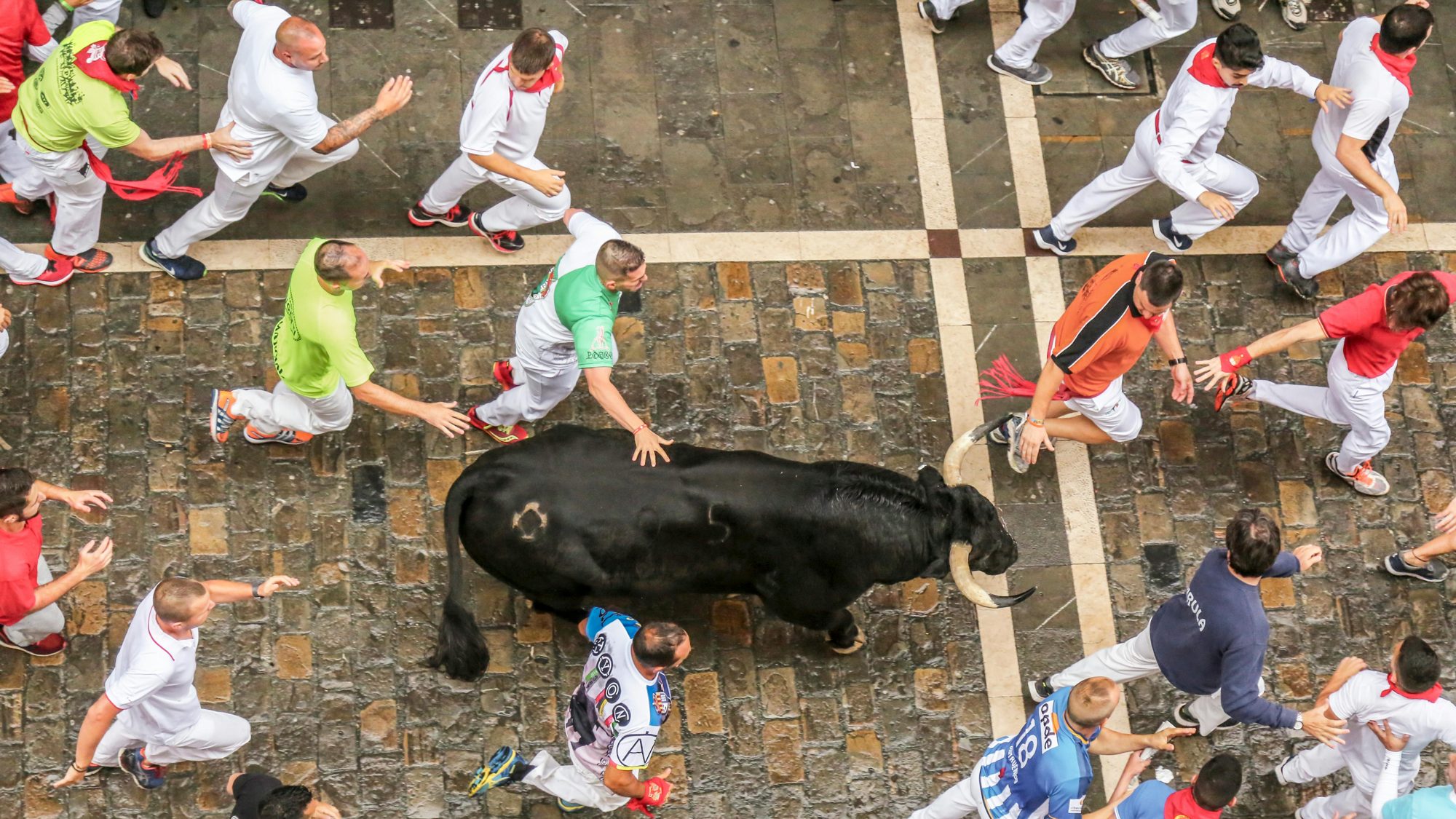
He found that most documentaries about Pamplona, especially those by directors from outside Spain, had avoided anything controversial about the bulls’ experience there, sometimes leaning on a token interview with an animal-rights group instead. Chasing Red shows the full trajectory of the bull in Pamplona, including what happens to the bulls after the run. It is not a topical documentary or a debate. Dennis set out to show plainly everything involved, so that, to the extent possible, viewers could judge the event for themselves. He did not want to hide behind other people’s words; the aim was to capture the reality and let things play out.
“I’m not an apologist for anything; this is not my culture, but I do want to capture it accurately, in the best way that I see fit… It wasn’t meant to be a talking-head documentary.”
Dennis Clancey
The film’s focus stays on the run and the runners. Its view of the animal is in a line Dennis speaks as the film’s narrator:
“I think the only thing everyone can agree on is that knowing this animal demands a profound respect for it.”
Dennis Clancey, narrating Chasing Red
Visiting the places in the film
Most of Chasing Red can be retraced on foot in an afternoon. The run route, Calle Mercaderes, Calle Estafeta and Calle Aldapa are all inside Pamplona’s Casco Viejo, and the Parque de la Media Luna is a short walk from the old town. Walking the route with a runner who knows it is what Encierro’s tours are for. Encierro is the company Dennis Clancey runs; his runner page is there too.
In Elche de la Sierra, the spot to find is the big mural that reads La Cuna del Encierro, on a prominent part of the town’s recorrido, its bull run route. David walks beside it with Carlos Santoro in the film, and it is easy to recognize.
The towns of that region hold many encierros of their own, often far less crowded than Pamplona. The scenes in Hellín were filmed on private family land and cannot be visited.
The story of the four runners the film follows is in What is Chasing Red?.
Questions people ask
Where was Chasing Red filmed?
Mainly in Pamplona’s old town during San Fermín 2012. The final film also includes scenes from Hellín and Elche de la Sierra in Albacete province, and from Arizona. Interviews and voice work were recorded in California.
Was the Grand Canyon scene shot with a drone?
Yes. The larger drone planned for it had damaged propellers, so the scene on the rim was shot with a DJI Phantom carrying a GoPro.
What does “la cuna del encierro” mean?
It means “the cradle of the encierro.” It refers to Elche de la Sierra and the Sierra del Segura, where every one of the area’s twelve municipalities holds its own encierros.
Can you visit the filming locations?
The Pamplona locations are public streets and a public park in and beside the old town. In Elche de la Sierra, the mural on the town’s run route that appears in the film is a recognizable spot. The Hellín scenes were filmed on private property.
Which footage was filmed but not used?
A planned ending in Cuéllar with Bill Hillmann, and a scene in Dennis’s Arizona apartment about why he runs.
Sources
- Dennis Clancey, interview with Chasing Red, October 23, 2026.
- Chasing Red (2015), directed by Dennis Clancey; credits and narration.
- Wikipedia, “Chasing Red” (filming locations and credits).
- Ayuntamiento de Pamplona, tourism page “Media Luna Park.”
- Calles de Pamplona, “Calle Aldapa” (2011).
- Hispanopedia, “Encierros de Elche de la Sierra,” citing the Junta de Castilla-La Mancha resolution of December 19, 2016.
- Spain.info (Turespaña), “Tamborada,” Hellín.