
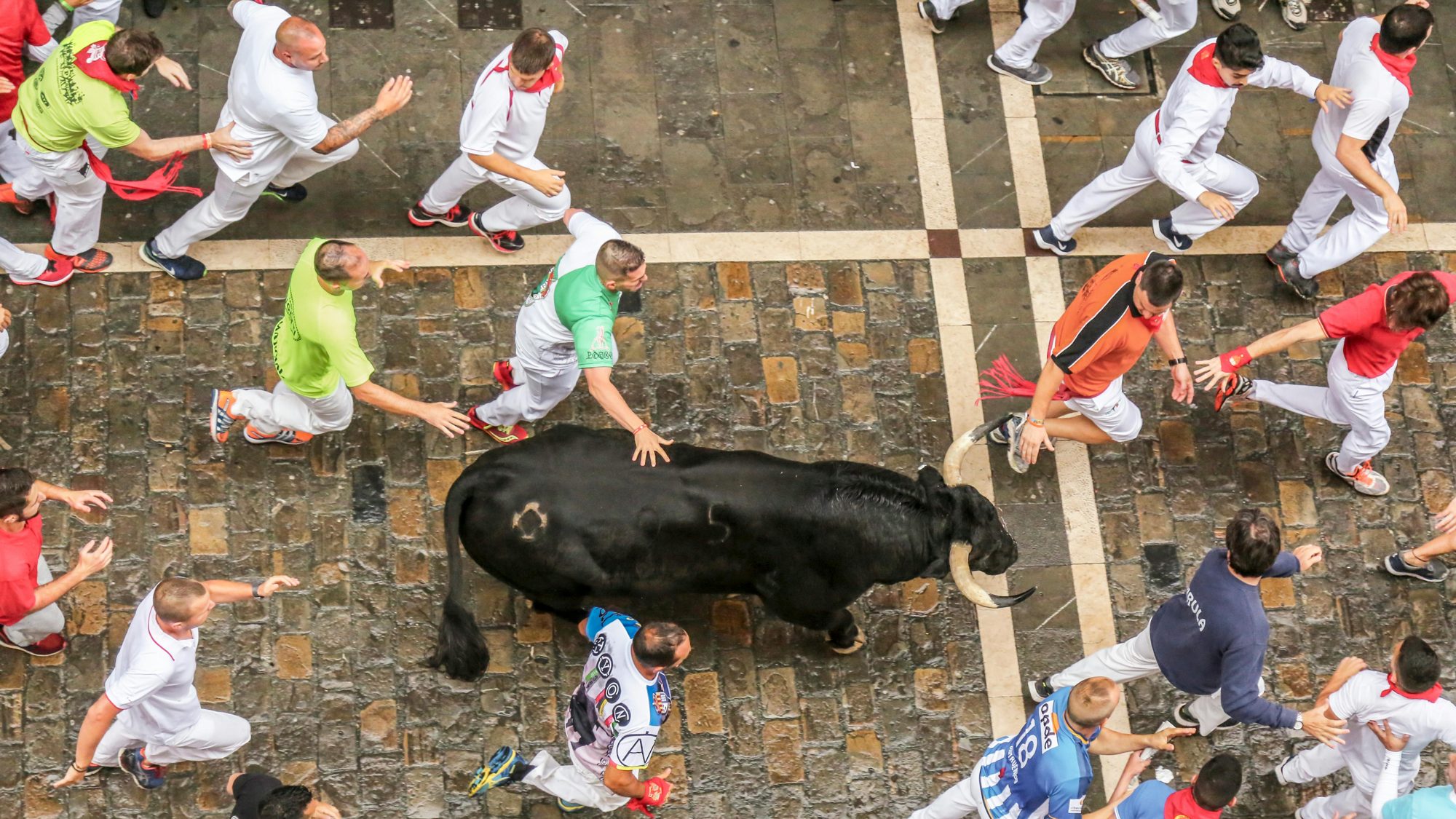
The encierro is the running of the bulls. Each morning of the Festival of San Fermín in Pamplona, from July 7 to July 14, bulls run through the streets of the old town to the Plaza de Toros, and people run in front of them. The run starts at 8 o’clock and can be over in as little as two minutes.
This is the encierro explained by people who run it, starting with what the word means and why anyone runs at all. Dennis Clancey, who directed the documentary Chasing Red, has run in Pamplona since 2007.
Key facts
- What it is: the running of the bulls through the streets of a town to its Plaza de Toros. In Pamplona it takes place each morning of San Fermín.
- The word: from a root meaning to confine or enclose, the same idea as locking someone up.
- When: July 7 to 14, starting at 8 a.m. No new runners may enter after 7:15.
- How long: as little as two minutes.
- Oldest claim: the town of Cuéllar, in Segovia, claims the oldest encierro in Spain.
- The streets: set stones called adoquines, washed by the city every morning before the run.
What the word means
To understand the encierro, it helps to start with the word itself. Its root means to confine, to enclose. The same root is often used for imprisoning or arresting someone: putting someone in a confined place.
That is the idea of the encierro. Bulls are brought in from open country and confined, ending in the streets of a town and, at the end, in its Plaza de Toros.
Where the encierro comes from
There are various styles of encierro in Spain. Cuéllar, a town in Segovia, claims to have the oldest. There, the bulls are first released out into the campo, the countryside. Herding them, encircling them and finally delivering them to the town are all parts of the encierro, and the last part is the bulls running through the streets of Cuéllar into its Plaza de Toros.
In Pamplona, the encierro developed as an efficient way of getting bulls from out in the pasture into the center of town. The most efficient way to do that was to board up the shops and let the bulls run.
“Because the Spanish bull is the most revered animal in Spain, eventually people wanted the feeling of being in the presence of that animal. And so they would jump in the streets to run with it.”
Dennis Clancey, director of Chasing Red
A morning in Pamplona
Runners start gathering in the street around 6:30 or 7 o’clock. They have to be on Calle Santo Domingo or at the Ayuntamiento, the town hall. By the city’s rules, no new runners may enter the route after 7:15, and the police can close access earlier when it is full. At 8 o’clock, the bulls run.
The stones
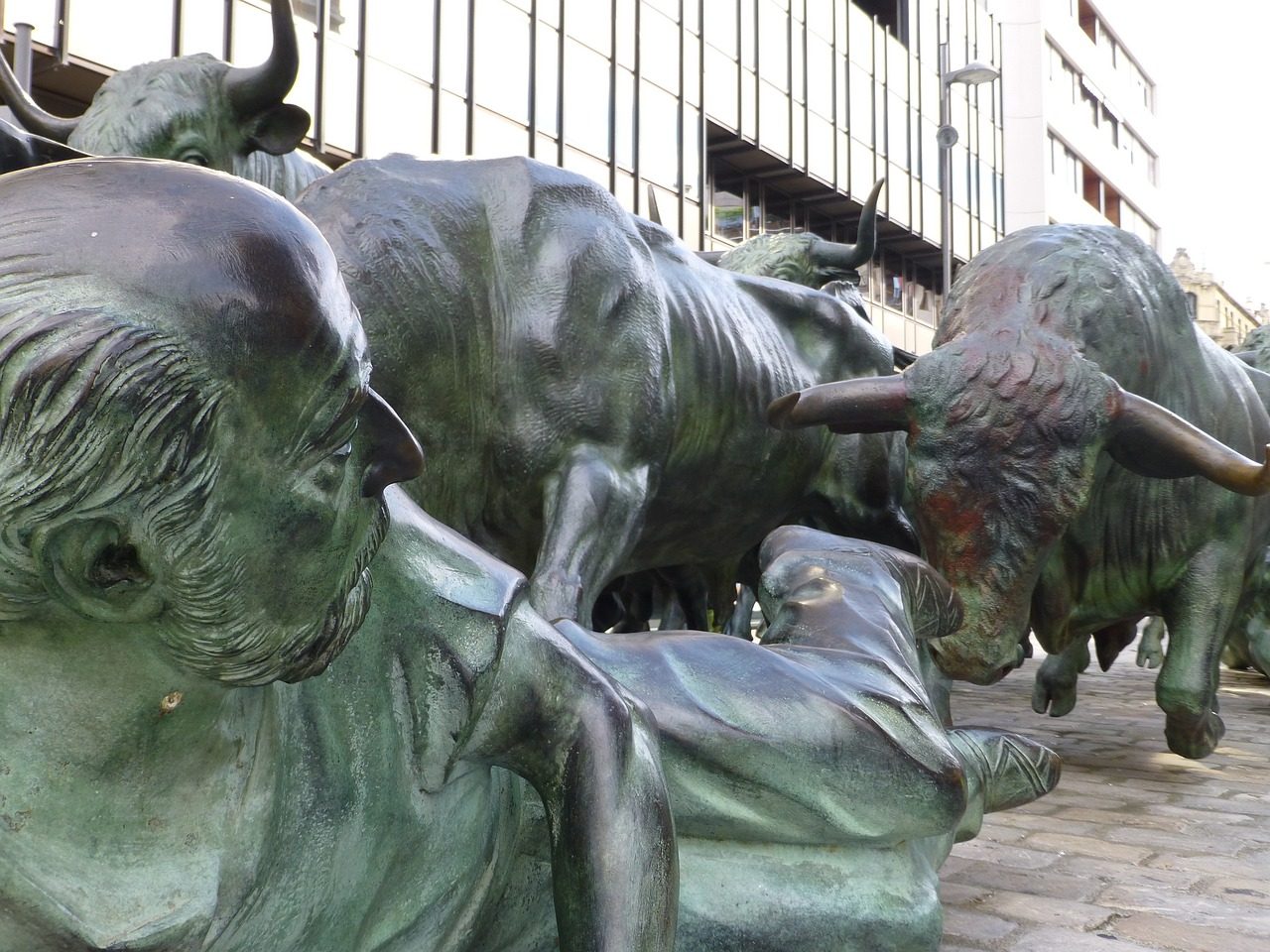
The streets of the route are paved with adoquines, set stones. Every morning the city makes a major effort to clean them before the run. Crews pick up trash by hand, and water trucks spray the streets with soapy water so they aren’t sticky from the night before.
A few pieces of trash still turn up, and Dennis often walks his own stretch of the route picking them up, so there is less for anyone to trip or slip on. At 8 o’clock the stones are still a little wet, because no sun has reached them yet, but once cleaned they give enough traction to run on.
The song to San Fermín
Before the run, runners sing to San Fermín, the patron of the festival, asking for his protection and his blessing. The song is a sign of the respect runners hold for the fact that they cannot control what happens in the run.
“On mornings that I don’t make it down to the small statue of the saint, I’ll still huddle with other runners and sing the chant with them, as a ritual to show that reverence to the tradition.”
Dennis Clancey
Eight o’clock, and after
The run can last as little as two minutes. As soon as it’s over, the streets are cleared and everyone goes back to enjoying the fiesta. In some cases, people make their way to the hospital, to be seen or to check on a friend who was hurt that morning.
What makes a good run
Asking what separates a good run from a bad one is a loaded question. Any run someone survives without injury is reasonably considered good. So is a run in which nobody did anything on the route that put other people in avoidable danger.
A bad run is one where a runner ends up in the wrong spot, as an obstacle to people who are running properly, or in a place they are not prepared to run. Being on the route drunk, or in any state of mind that is not clear, makes it a bad run. There are exceptional runs, such as runners who can stay on the horns for long stretches. But a run isn’t bad because it wasn’t exceptional.
“I think a good run is abiding by the general rules and avoiding circumstances where you are a hindrance or a danger to others.”
Dennis Clancey
What people get wrong
The most common misconception is about who runs and why.
“To the casual observer who’s never been to Pamplona, they assume that the running of the bulls is for drunk people that approach it with a level of aloof bravado. For the serious runners, that couldn’t be further from the case.”
Dennis Clancey
A serious runner never wants to give the impression of having figured out the run. Arrogance toward the run means stepping outside the reverence for the tradition, and with it, outside San Fermín’s protection. It isn’t that the saint would act against a runner. It’s that a runner who doesn’t respect the tradition is no longer within it.
“You don’t see a boastfulness about the run. There’s a solemnness, and the recognition comes from others, not from oneself.”
Dennis Clancey
Why Encierro exists
Over the years Dennis saw that the mistakes of first-time runners usually came from a lack of good information. People talk about the run being overcrowded, and about runners who don’t understand it. He started Encierro to give people in Pamplona a place to learn from runners before deciding whether to run at all.
Whether to run is a personal decision everyone has to make.
“We certainly never want to encourage anyone to run with the bulls, but I do think there is value in people making more informed decisions, having a plan, understanding the sequence of events.”
Dennis Clancey
The run is dangerous, and anyone considering it should do their research and have someone to talk to who is actively engaged in the run. The idea of Encierro is that active, respected bull runners provide instruction and answer questions for people learning for the first time, so that anyone in Pamplona who wants that has access to a runner. Its guides have been on the run for years, have run every section, and have spent years dedicated to each one, and they stay with the people they guide until every question has been answered.
The encierro on film
Chasing Red follows four runners through the eight runs of the 2012 Festival of San Fermín and tells the story through what they did on the street. The full story of the film is in What is Chasing Red?, and the meaning of its title is in What does “chasing red” mean?
Questions people ask
What does “encierro” mean?
It comes from a root meaning to confine or enclose, the same idea as locking someone up. The encierro is the process of bringing bulls in and confining them, ending with the run through the streets to the Plaza de Toros.
When is the encierro in Pamplona?
Every morning of the Festival of San Fermín, from July 7 to July 14, starting at 8 a.m. Runners gather from about 6:30, and no new runners may enter after 7:15.
How long does the running of the bulls last?
The run itself can be over in as little as two minutes.
Where did the encierro start?
The town of Cuéllar, in Segovia, claims the oldest encierro in Spain. In Pamplona it began as an efficient way to bring bulls from the pasture to the center of town.
Should I run with the bulls?
That is a personal decision, and nobody should be encouraged into it. If you are considering it, learn the run first from people who run it. Encierro exists for exactly that.
Sources
- Dennis Clancey, interview with Chasing Red, October 22, 2026.
- Ayuntamiento de Pamplona, Bando de San Fermín 2026 (dates, start time, entry cutoff).
- encierro.com, the runner-led guides to the encierro.