
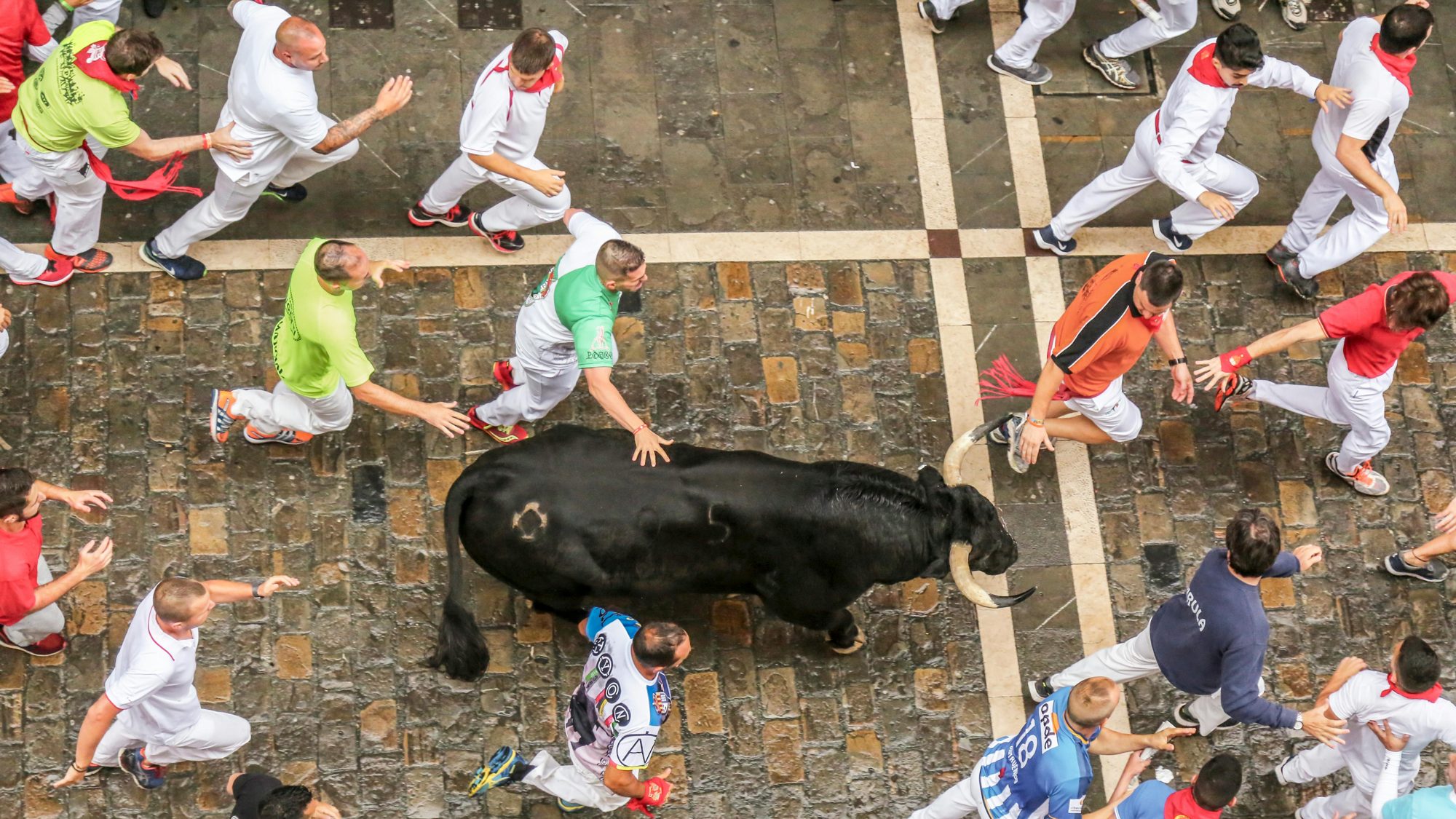
“Chasing red” means the relentless pursuit of a goal, a passion or a calling that gives your life purpose, even when the people around you don’t understand why you do it.
The phrase comes from the documentary Chasing Red and from one of the most repeated myths in the world: that bulls charge because they see red. They don’t. Bulls are red-green colorblind. What they chase is movement, challenge and instinct. The crowd that thinks it understands the bull has the reason wrong.
Key facts
- Meaning: the relentless pursuit of a goal, passion or calling that gives you purpose, even when others don’t understand it.
- Origin: the title of Chasing Red (2015), a documentary by Dennis Clancey about the running of the bulls in Pamplona, Spain.
- The myth behind it: bulls don’t see red as a distinct color. Cattle have two-color vision and respond to movement, not color.
- First working title of the film: The Pamplona Project.
- In everyday speech: “He’s just chasing red.” “She’s chasing red.” Someone committed to a pursuit that doesn’t need outside approval.
The meaning of “chasing red”
To chase red is to go after something with total commitment. The phrase carries three ideas.
Persistence. A chase doesn’t stop because it gets hard. The point of the phrase is the refusal to quit.
Purpose. You chase red because the pursuit matters to you. It is tied to who you are, what you value and what you want your life to be about.
Being misunderstood. From the outside, the pursuit looks reckless, irrational or pointless. From the inside, it makes complete sense.
The film’s own description calls it a meditation on “human persistence, purpose, and misunderstood ambition.”
“There are so many things in our lives that not everyone always needs to understand, but I think it’s valuable that people have a clear logic in their own minds around why they do something, or why something’s important. That doesn’t mean it needs to be rational, but it should be aligned with their values and their priorities.”
Dennis Clancey, director of Chasing Red
Where the phrase comes from
The Pamplona Project
The title did not exist when the film began. Dennis Clancey started filming in Pamplona years before he knew what the story was, and for a long time the project went by the working title The Pamplona Project. The name Chasing Red came several years into the work.
Dennis first ran with the bulls in 2007. Over the following years he ran, traveled across Spain and learned the tradition from inside the street, not from a balcony. The main filming took place during the eight runs of the 2012 Festival of San Fermín, with footage from earlier years woven in. By then he was no longer an outsider with a camera, and the title came out of that change.
“It wasn’t until I became a runner myself and started developing my own history within the city that the concept of Chasing Red was born.”
Dennis Clancey
Chasing on two fronts
The title also describes what Dennis himself was doing for those years. He was chasing a film that took the better part of a decade to finish, and he was chasing the run itself.
“Making a documentary in Pamplona was something I was chasing. And at the same time, within the film, I was chasing it as a runner.”
Dennis Clancey
The myth that became the metaphor
The idea starts with the most common belief about bulls: that the color red enrages them. It is wrong. If the bull isn’t chasing red, the question becomes what it is chasing, and the same question can be asked of the runners in the street.
Do bulls really see red?
No, not as a color that stands out.
How bulls see color
Human eyes have three types of cone cells, the receptors that detect color. They are tuned roughly to short (blue), medium (green) and long (red) wavelengths of light. That long-wavelength cone is what lets us see red as vivid and separate from green.
Cattle have only two types of cones. A study of the light-sensitive pigments in the eyes of cows, goats and sheep found this two-cone, or dichromatic, pattern in all three species. In practice, bulls see the world mostly in blues and yellows. Reds and greens fall together into similar, muted tones. A bull is, in effect, red-green colorblind.
What actually makes a bull charge
Tests with live bulls point the same way. Shown pieces of cloth in different colors, a bull goes after whichever one is moving. A still red cloth draws little reaction. A moving cloth of any color, blue, white or green, draws a charge.
What triggers the bull is movement and anything it reads as a threat or a challenge.
Why the myth survives
The red myth survives because it is easy to picture and easy to repeat. Spectators see a bull chasing red. In reality it is chasing something they can’t see.
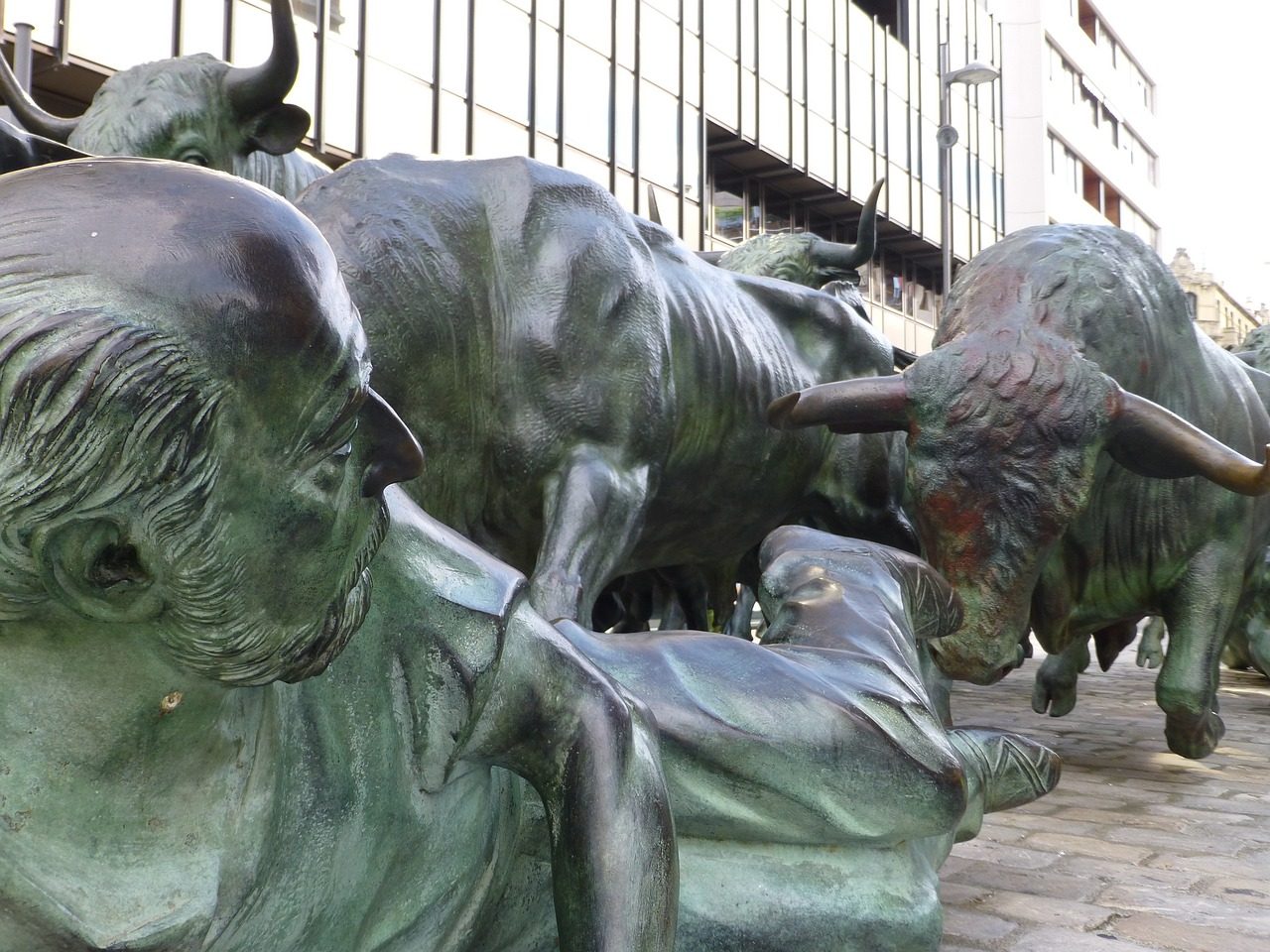
What the bull is really chasing
Dennis’s own account of the title, on the film’s site, describes the bull’s “unyielding pursuit of a goal it cannot fully comprehend,” and calls it “persistent to a fault.” It is chasing something it does not fully understand.
The title applies the same idea to people.
What “chasing red” means for people
For the runners of Pamplona, the encierro is the clearest example. To outsiders, running in front of fighting bulls looks reckless. Runners keep coming back anyway, year after year, and their reasons are rarely understood by the people watching from the balconies, just as the bull’s drive is misunderstood by everyone who believes the red myth.
Chasing red in the film
Chasing Red follows four runners, Dennis Clancey, Bill Hillmann, David Ubeda and Josiah Lloyd, through the eight runs of the 2012 Festival of San Fermín, and asks why they run.
“The concept of Chasing Red is baked into nearly the entire film. The documentary starts with the death of a runner and the ultimate question of why someone might do this. The documentary then goes about providing a window into the lives and the psyches of its characters in an attempt to answer that question.”
Dennis Clancey
The film won Best of the Fest at the LA Indie Film Festival in 2015 and is distributed by Magnolia Pictures. The full story of the film is in What is Chasing Red?, and you can watch Chasing Red free on The Roku Channel and Hoopla, or rent or buy it on Prime Video, Apple TV, Fandango at Home, Google TV and YouTube.
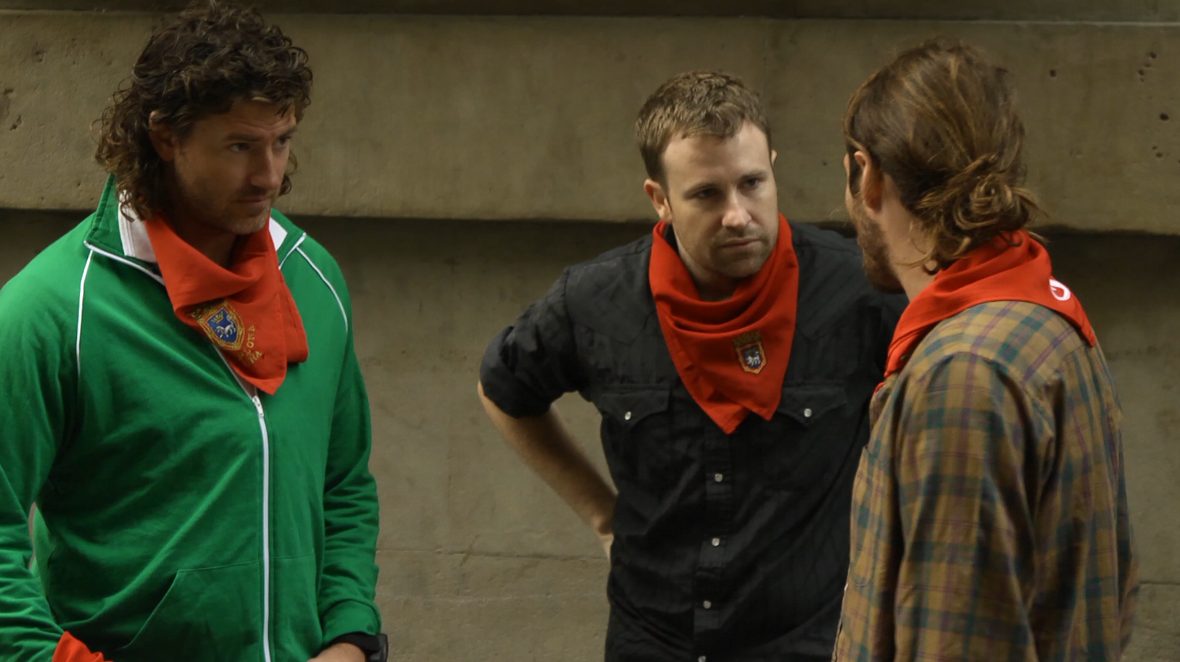
Why the runners wear red anyway
If bulls can’t see red, why is Pamplona a sea of red and white every July?
Because the red was never for the bulls. The red pañuelo (neckerchief) and faja (sash) are part of the dress of the Fiesta de San Fermín. The red is widely said to honor the martyrdom of San Fermín, the city’s patron saint, and the white and red together have become the uniform of the whole city during the fiesta. For a runner, the red pañuelo is a mark of belonging, not a target.
For the full story of what runners wear and why, the runners at encierro.com keep a detailed guide to the San Fermín uniform.
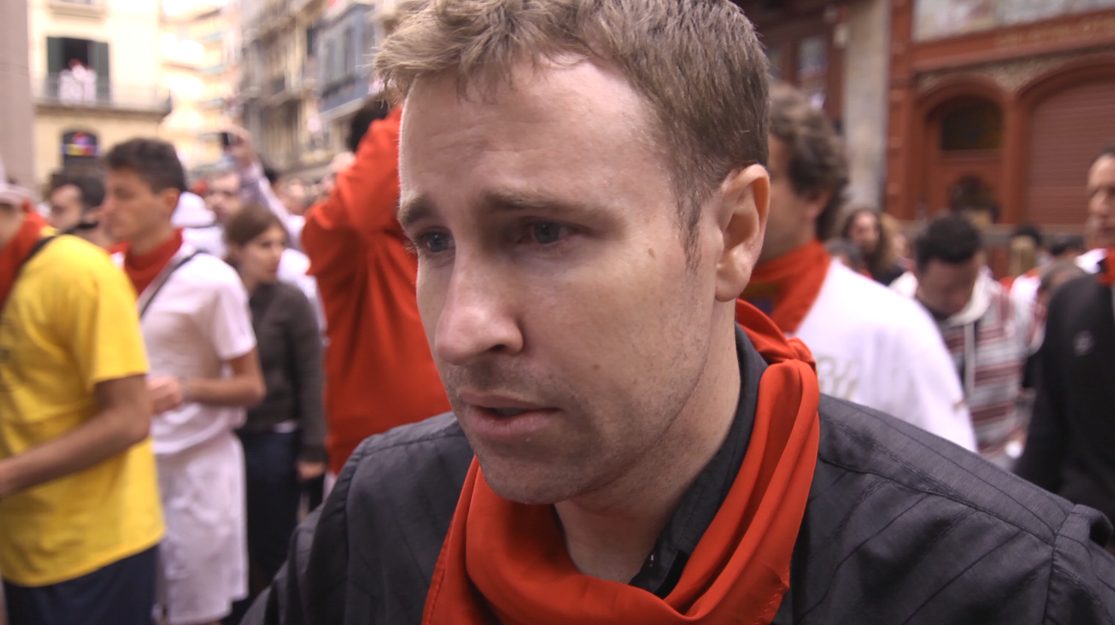
“Chasing red” in everyday language
“Chasing red” now appears on Urban Dictionary, defined as “the relentless pursuit of a goal, passion, or obsession that gives you purpose.” The entry ties the phrase to the film and to the bulls’ colorblindness.
The film’s own description ends with the question the title asks of everyone who watches it: “What is your red? And why do you chase it?”
Questions people ask
What does “chasing red” mean?
It means the relentless pursuit of a goal, passion or calling that gives you purpose, even when other people don’t understand it. The phrase comes from the documentary Chasing Red about the running of the bulls in Pamplona, and from the fact that bulls don’t actually charge the color red.
Where does the phrase “chasing red” come from?
From the title of the 2015 documentary Chasing Red, directed by Dennis Clancey. The film’s working title was The Pamplona Project. Clancey arrived at “Chasing Red” years into making the film, after becoming a runner himself, and built it on the misconception that bulls are provoked by red.
Do bulls really hate the color red?
No. Cattle have two types of color receptors instead of our three, so red doesn’t stand out to them as it does to us. Bulls react to movement and perceived challenge. A moving cloth of any color draws a charge; a still red one does not.
Are bulls colorblind?
Bulls are red-green colorblind, not blind to all color. Their two-cone vision lets them see blues and yellows, while reds and greens look similar and muted.
Why do runners in Pamplona wear red if bulls can’t see it?
The red neckerchief and sash belong to the dress of the San Fermín fiesta and are traditionally linked to the martyrdom of San Fermín, Pamplona’s patron saint. They have nothing to do with the bulls.
Is “chasing red” the same as being reckless?
No. Dennis Clancey’s view is that a pursuit doesn’t need to be rational to anyone else, but it should be aligned with a person’s values and priorities.
Sources
- Jacobs, G. H., Deegan, J. F., and Neitz, J. (1998). “Photopigment basis for dichromatic color vision in cows, goats, and sheep.” Visual Neuroscience, 15(3), 581-584.
- Live Science, “Why do bulls charge when they see red?”
- Urban Dictionary, “chasing red.”
- Wikipedia, Chasing Red (2015 film).
- Dennis Clancey, interview answers to the Chasing Red site, October 2026.